
On Monday, Newfoundland and Labrador Hydro (NLH) and Hydro Québec (HQ) announced a new long-term deal for supply from the Churchill Falls hydro generating station and a path forward for a number of new developments along the Churchill River. The new deal – being referred to as the Definitive Cooperation and Implementation Agreement (DCIA) – marks the largest energy deal in Canadian history and is valued at $273 billion over the next 50 years.
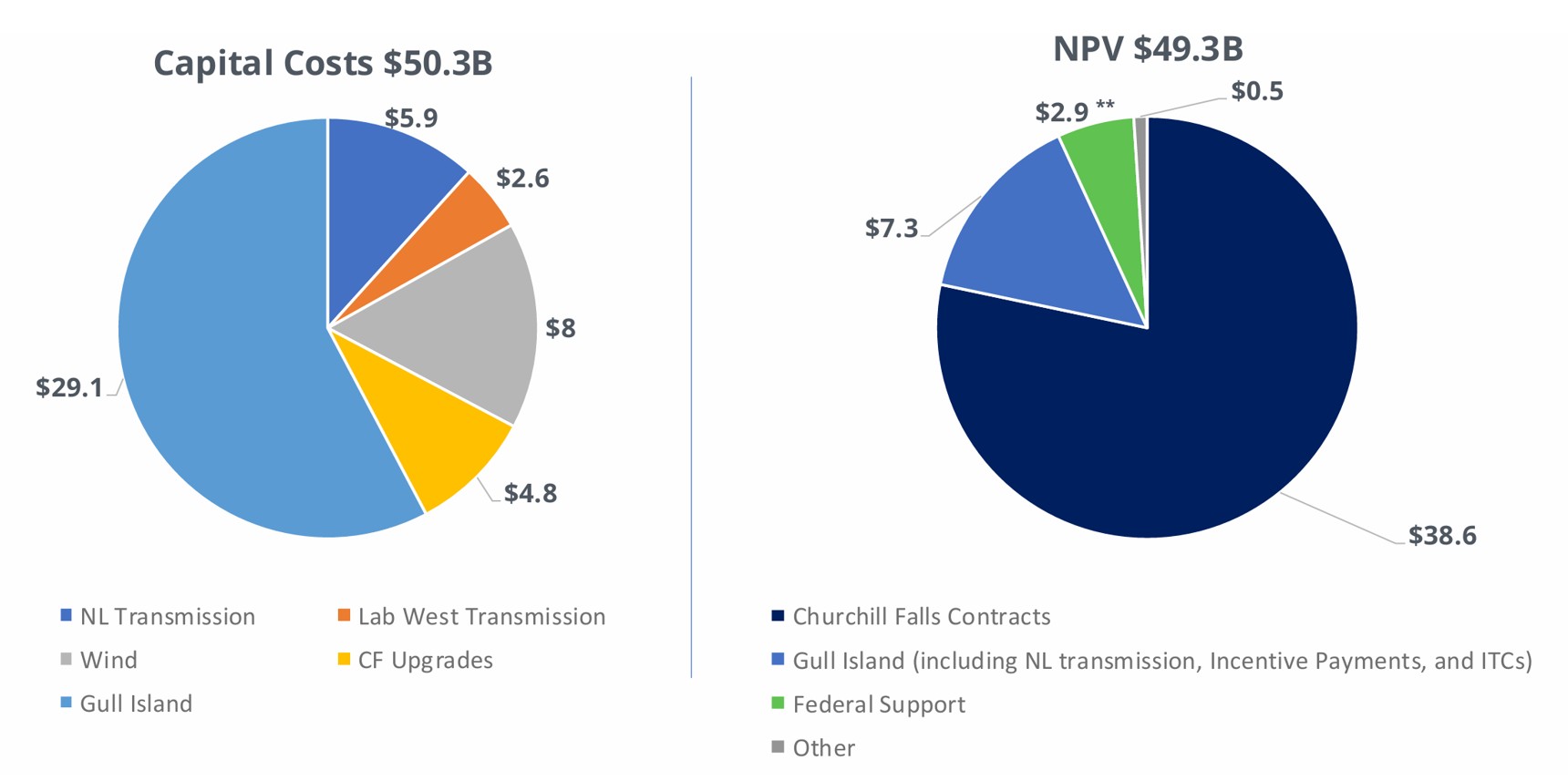
As part of the DCIA, there will be up $50 billion of capital investment along the Churchill River in Labrador (see figure below for capital costs by project). These investments include:
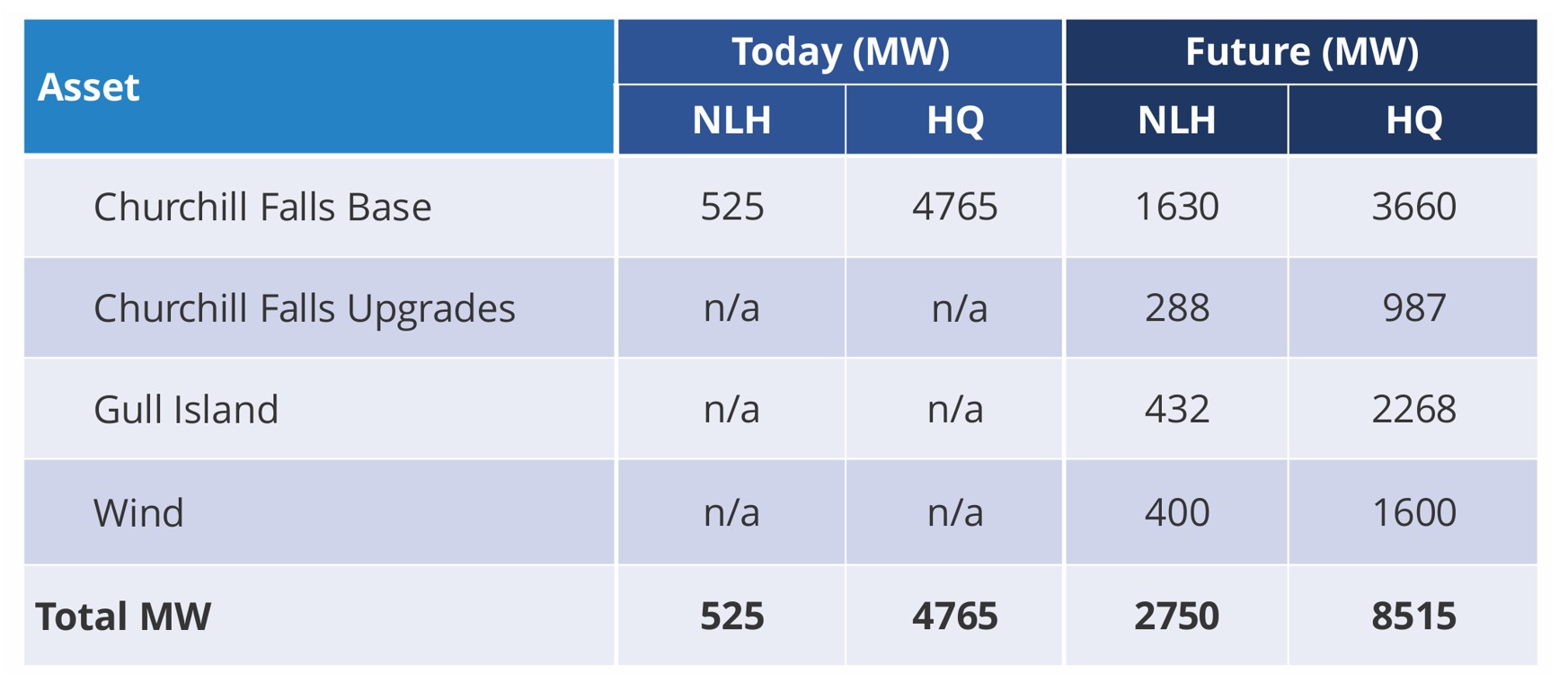
In total, the DCIA will result in 11,265 MW of capacity along the Churchill River and across Newfoundland and Labrador – up from the 5,200 MW at the Churchill Falls generating station today.
The federal government has agreed to provide up to $10 billion in financing, with around 1/3 going to the Labrador West transmission line, wind development and the Gull Island and Churchill Falls upgrades, respectively.
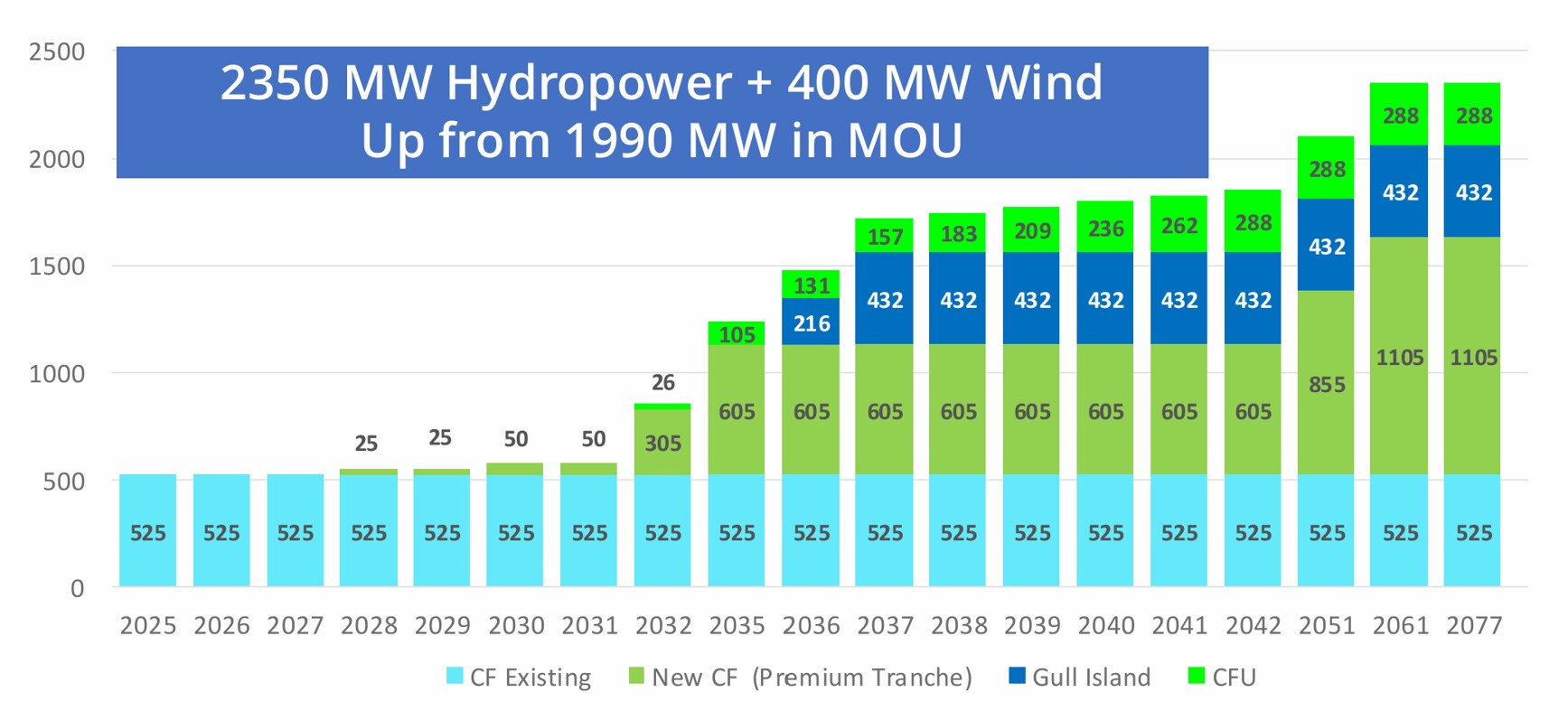
One of the major changes from the 2024 MOU – and one of the major stumbling blocks to getting it approved in Newfoundland and Labrador at that time – is that NLH will be allocated an increased amount of energy and capacity from the Gull Island and the Churchill Falls upgrades for domestic consumption. In total, Newfoundland and Labrador will have access to up to 2,350 MW of hydro capacity, as well as up to 400 MW of wind capacity to meet its own needs.
In addition, the DCIA provides NLH with the option for up to 985 MW of its power allocation to be exposed to market pricing in Ontario, New York and New England. The export pricing includes references to the recent long-term contracts that HQ has signed into New York and New England – the Champlain Hudson Power Express (CHPE) and the New England Clean Energy Connect (NECEC), respectively. Again, the lack of export potential for NLH in the previous 2024 MOU was a stumbling block. NLH can also choose to sell back some portion of its allocation to HQ at a premium price to the DCIA contract price (a 150% premium).
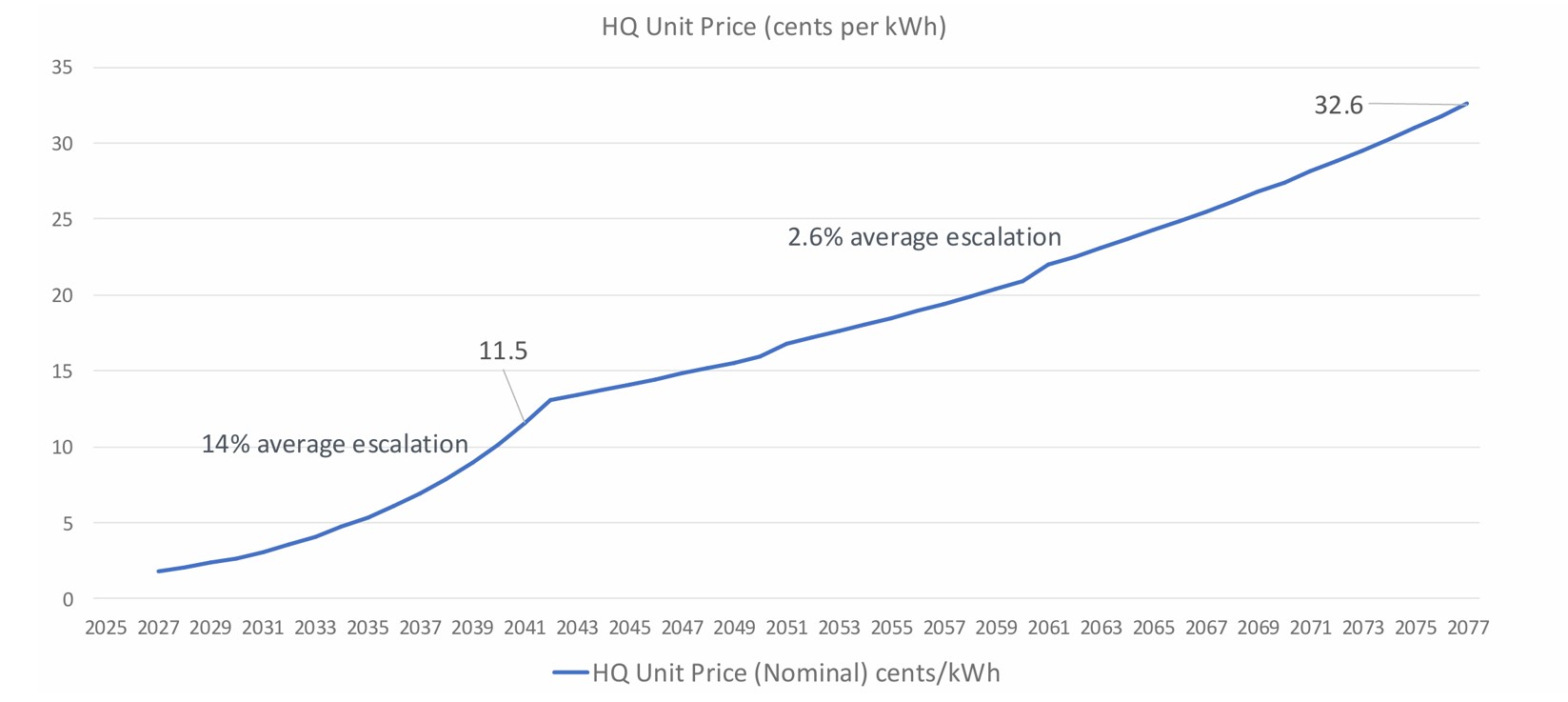
In terms of pricing, NLH says the DCIA increases the NPV from $36 billion (in 2024$) in the 2024 MOU to $49 billion (in 2026$). The updated pricing will replace the existing Churchill Falls PPA that currently provides power to HQ for $2/MWh and pushes it to $18/MWh in 2027 and then increases by 14% annually until 2041 when it is more than $110/MWh. At the end of the PPA, the price for supply from Churchill Falls will be more than $320/MWh (in 2077 dollars).
The final agreements for the DCIA are expected by the end of 2026, with the Churchill Falls PPA coming into force in 2027.
The Churchill Falls PPA in the DCIA has a significantly different pricing structure than the 2024 MOU. The previous PPA was intended to incorporate several different “blocks” of power that would be tied to various price indices, including export markets, avoided cost and other pricing points. The DCIA has simplified the pricing structure, as the annual payments are largely fixed, but will be adjusted if inflation is above or below a certain threshold.
Power Advisory Commentary
The DCIA marks a watershed moment between Québec and Newfoundland and Labrador for a number of reasons:
More importantly, the DCIA is another sign that Canada is willing to move forward with ambitious energy projects that will be needed to meet growing demand in nearly every province. And finally, it also highlights that provinces – which historically have siloed their electricity grids and development – can work together with the federal government to support large-scale energy projects.